
Developmental Editing is Heartbreaking
My Process and Example

Hello! Welcome to another week of author rambles, I know I’ve been doing a lot of them but they help get me in a good writing mood for the rest of the week so here we are. If you haven’t already, please consider picking up a copy of my book “Reasons Found In Promises”
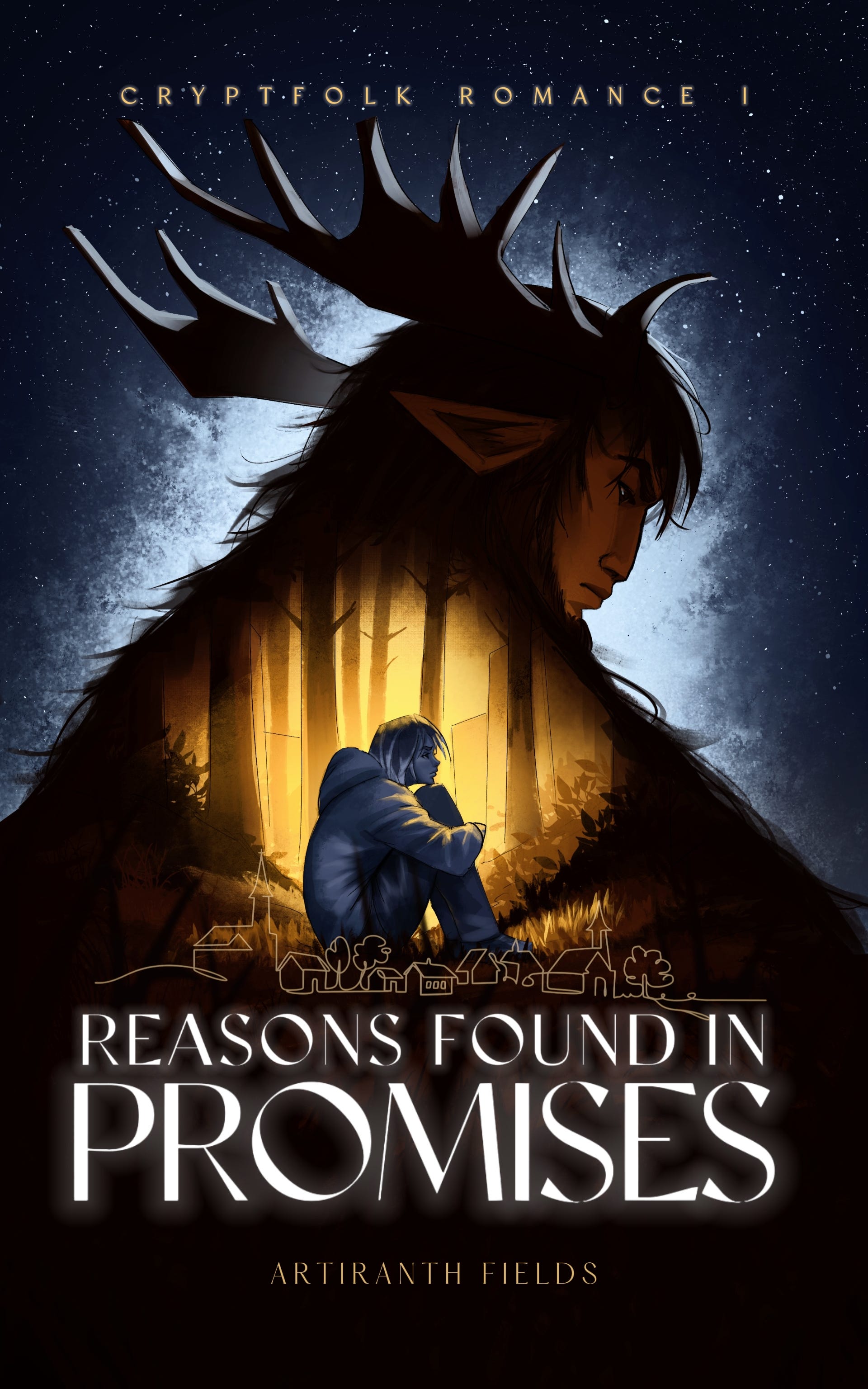
It is available with KU until the end of the month, but is otherwise purchasable as an ebook or paperback on Amazon:
***Click on kindle Icon to be taken to your Amazon region
Otherwise, you can purchase the paperback directly from me. The printing quality is better sense its through IngramSpark and I get more back for the same price:
Now onto the fun stuff.
What is Developmental Editing?
Part of the reason why I wanted to make this post is because I feel like I throw this phrase around a lot, with many readers probably not having a full understanding of what it is.
However it is arguably the most important part of my writing process, and what makes or breaks many books.
“Developmental Editing” is a broad term for analyzing the book and making changes to improve the plot, structure, thematic consistency and more. This can include strengthening foreshadowing, moving scenes around, cutting plots and even characters. Its all about the broad strokes, making sure each scene earns its place in the book and the timeline is cohesive.
It differs from “Line Editing” in the fact that you do not focus on sentence structure or good prose, not even the fluidity of dialogue. As such, it is typically done early, right after drafting. Because otherwise, everything would be wasted effort. You would introduce so many prose issues during developmental editing that you would have to redo the line edit afterwards.
How do you do it?
Well this is kind of a mixed bag and depends on the author.
Some of you who may have been here a while may know that I often refer to myself as a “chaos writer”
That is because I start writing books on nothing more than a fever dream of a scene, vibes, and coffee. I write whichever scenes come to mind, in any order, and loosely place them on a timeline. As more gets written I refine the story, narrow down the scenes, discover character quirks etc. By the time the “barf draft” is done, I’m left little more than a large collage of scenes in a mostly correct order.
As a result… I do a lot of work in developmental editing. It is my bread and butter as an author.
Other authors I know of, do more outlining. As a result, they front load a lot of that work, and their first draft is generally cleaner, and so their process looks very different.
My Personal Process
So, how does it work?
Well, for me the greatest tool in my repertoire is the reverse outline.
Basically once the barf draft is complete (and after I do a cursory line edit to make it readable) I will go through the book, typically backwards and create a reverse outline. I take each chapter and divide it into scenes. Each scene is roughly where the “camera switches” or in other words the focus changes.
If any of you remember watching Harry Potter and the Prisoner Of Azkaban there is this incredible scene:
The significance of it, is that it is one long take with no cuts. I view book scenes in the same way, if the camera is able to follow the two characters seamlessly without cutting to a new room, theme or concept: that is one scene. The book is then a series of these long takes… except you also get the inner monologue of characters sometimes.
For each scene I then decide the purpose that the scene serves divided roughly into these categories:
Character: Establish, develop, hint, transform
Plot: start, advance, resolve
Relationship: Build, clash, start, strengthen, change
Decision: Moment where characters act on their agency
Theme: Symbolisms, motif, parallel, contrast
World: Backstory, setting details, exposition
Foreshadowing: bits that foretell incoming events/where they pay off
Tone: pacing, feel, vibes, establishment, tension.
Each scene doesn’t have to — in fact it should not — have all of these. But I aim for anywhere from 3 to 5. If it has less, then it means its a scene that can be summarized or can be integrated with another scene. If it has too much, I try to dial it down, or at the very least make sure all the messages don’t get muddied and that I don’t have too many of those in a row.
I find that reading scenes that have upwards of 7 “purposes” tends to be very draining, and prefer to fluctuate my scenes having “heavier” scenes be followed by “lighter” scenes and so and so fourth.
An Example
I have something fun for you guys today! As some of you may know my hubby is also a creator and is slowly starting to grow his own brand. But, on the side, my own writing shenanigans have led him to start his own story. It is still in its WIP stages, but as he got further in he found himself a little stuck on how to proceed, but didn’t know how to edit to get himself moving forward again.
Him and I are very different in learning styles and approaches. Basically, I’m a very top down thinker, I like to take high level concepts and drill down into them. Breaking them apart to see the innards. While he likes to build things like a castle from the ground up, adding bricks as he goes. As such, where I start with the broad strockes of scenes, plots, and themes, he starts with the world building and organization names.
Many a squabble there, but all in good fun.
However, he did ask for me to help him out with his first few chapters to gleam an idea of my developmental editing process. And, has kindly allowed me to share the first the document to a certain point.
So here is an example of his first 3 chapters that I did:

Messy! Imagine one for the 50 chapters of “Reasons Found In Promises.”
Big document.
But, once on paper and sometimes printed it is extremely easy to see issues. Even at a glance you can spot continuity errors, scenes that don’t earn their keep, muddy themes, and more. And mind you, his is MUCH cleaner than my first drafts!
From there, once this is done with the whole book, the next steps would be my infamous sticky note process. In which each edit gets a sticky note, with which I re-read the needed sections (sometimes the whole book) then when its done, chuck out the sticky note. If other edits come to mind during, new sticky note.
Rinse, repeat, until no more sticky notes.
Why is it Heartbreaking?
Well, because this is where the hyper fixation fueled, obsession driven, and crazy idea fairies need to be kicked to the curb, locked up, and told the shut the fuck up a moment while you try to think.
You have to objectively take a look at each chapter and rip it up into scenes. Then, you have to dissect them to their core. Not the fun dialogue or whimsical asides, but what it actually does for the story and the reader. And then, you have to decide if it deserves to live.
And if it doesn’t? It must go.
In one way or another. It either needs to be changed until it works, or it needs to be combined with another scene, or sometimes just taken out all together.
I can dress it up all day with this fancy process and colorful sticky notes.
But at the bottom of it is taking my book baby under a microscope and turning it from the Frankenstein of scenes and random ideas into a cohesive work of fiction.
And its never completely painless. Even if nothing major that I was in love with gets cut, many scenes that were originally just thrown together have to be re-done and and reshuffled.
The biggest motivator? That by doing this, you are making each scene better. Which makes each chapter better. And as a result, making the book the best it possibly can be.
Last Thoughts
Thank you all again for being here! Let me know what you think of the developmental editing process. As an author, do you do something like this? Or how does yours differ? As a reader, do you ever think about what happens behind the courtain, or behind the cover so to speak?
Let me know in the comments, and I will see you again, next week!

This was very enlightening. I knew there were various processes and everyone would have their own methods. This has been a huge insight. O.o
I would love a more concept breakdown - on things ur currently drafting or well anything in general. Perhaps the process of it too :D. When I say concepts like certain theme choices and/or ... its hard to put into words >.<